Clues

  • Old Russian Rulers NYT

    Old Russian Rulers appears as a crossword clue in the New York Times and other major puzzle publications. The answer most frequently linked to this clue is TSARS, a five-letter word referring to the monarchs who governed Russia before the fall of the imperial system in 1917. Several crossword databases list TSARS as the most likely solution for the clue “Old Russian rulers.” For crossword solvers, the clue seems simple. Yet behind that five-letter answer lies centuries of Russian royal history, powerful dynasties, territorial expansion, and dramatic political change.

    Meaning of Old Russian Rulers

    The word Tsar (also spelled Czar) served as the title of Russian monarchs. The title developed from the Roman word “Caesar,” carrying a sense of imperial authority. Russian rulers adopted it to emphasize supreme power over the state and its territories. Plural form:
    • Tsar → One ruler
    • Tsars → Multiple rulers
    Crossword clues may appear in different forms:
    Crossword Clue Common Answer
    Old Russian ruler TSAR
    Old Russian rulers TSARS
    Russian ruler of old TSAR
    Pre-1917 ruler TSAR
    Former Russian monarch TSAR
    Several puzzle references connect these clues directly to TSAR or TSARS.

    Why NYT Crossword Uses “TSARS”

    Crossword constructors favor words that contain distinctive letter combinations and fit many puzzle layouts. Reasons TSARS appears frequently:
    • Five letters
    • Common historical term
    • Easy to cross with other words
    • Familiar to regular crossword solvers
    • Rich historical background
    The New York Times crossword regularly features historical, political, and royal terminology, making TSARS a natural choice.

    Origins of the Tsar Title

    Russian rulers used various royal titles across different periods. The title “Tsar” became formally associated with Russian sovereignty during the reign of Ivan IV, better remembered as Ivan the Terrible. In 1547, Ivan IV became the first Russian ruler formally crowned as “Tsar of All Russia.” This coronation elevated Moscow’s status and strengthened claims of imperial authority. Before that period, rulers generally carried titles such as:
    • Grand Prince
    • Prince of Kiev
    • Prince of Moscow
    The transition marked a major shift in Russian governance.

    Major Periods of Russian Rule

    Russian monarchy evolved through several historical phases.
    Period Approximate Dates Leading Rulers
    Kievan Rus 9th–13th centuries Rurik Dynasty princes
    Grand Principality of Moscow 13th–16th centuries Moscow princes
    Tsardom of Russia 1547–1721 Tsars
    Russian Empire 1721–1917 Emperors and Tsars
    Kievan Rus served as the earliest East Slavic state and laid foundations for later Russian governance. Rulers
    Famous Old Russian Rulers

    Several monarchs left lasting marks on Russian history.

    Ivan IV (Ivan the Terrible)

    Ivan IV remains one of the most discussed rulers in Russian history. Achievements:
    • First officially crowned Tsar
    • Expanded Russian territory
    • Strengthened central authority
    • Reformed military administration
    His reign also witnessed harsh policies and political repression. Historians still debate various aspects of his rule.

    Peter the Great

    Peter transformed Russia into a major European power. His administration introduced:
    • Military reforms
    • Naval expansion
    • Government modernization
    • Western-inspired institutions
    In 1721, Russia entered a new phase as the Russian Empire, and Peter adopted the title of Emperor. Despite that change, many Russians still referred to monarchs as Tsars.

    Catherine the Great

    Catherine II presided over one of Russia’s strongest periods. Highlights:
    • Territorial growth
    • Educational reforms
    • Cultural development
    • Expansion of diplomatic influence
    Her reign lasted more than three decades and helped place Russia among Europe’s leading powers.

    Nicholas II

    Nicholas II became the last ruling monarch of imperial Russia. Important points:
    • Ruled from 1894 to 1917
    • Faced political unrest
    • Witnessed revolutionary movements
    • Abdicated during the Russian Revolution
    His abdication brought centuries of royal rule to an end.

    The Romanov Dynasty

    The Romanov family governed Russia for more than three centuries. Notable Romanov rulers:
    • Michael I
    • Peter the Great
    • Catherine the Great
    • Alexander I
    • Alexander II
    • Nicholas II
    Their dynasty shaped Russian politics, military power, culture, and international relations.

    Difference Between Tsar and Emperor

    Many readers encounter both titles and assume they describe separate systems.
    Title Usage
    Tsar Traditional Russian royal title
    Emperor Official imperial title after 1721
    After Peter the Great established the Russian Empire, monarchs formally carried the title Emperor. Popular usage, however, still favored Tsar.

    Why Crossword Solvers Search “Old Russian Rulers NYT”

    Search traffic increases whenever this clue appears in a puzzle. Common reasons:
    • Verifying a crossword answer
    • Checking letter count
    • Learning historical background
    • Comparing puzzle solutions
    • Solving related clues
    Many crossword answer sites list TSARS as the solution for the plural clue and TSAR or CZAR for singular versions.

    Historical Characteristics of Tsarist Rule

    Russian monarchs exercised broad authority over government affairs. Features associated with Tsarist government:
    • Centralized administration
    • Hereditary succession
    • Strong military leadership
    • Religious influence
    • Large territorial control
    Russian monarchs frequently carried the title “Autocrat,” emphasizing supreme authority over state affairs.

    Russian Expansion Under the Tsars

    Several Tsars supervised dramatic territorial growth. Expansion reached:
    • Siberia
    • Baltic regions
    • Black Sea territories
    • Parts of Central Asia
    • Areas of Eastern Europe
    This growth transformed Russia into one of the largest states in the world.

    Crossword Clue Variations Related to Tsars

    Puzzle creators regularly use alternative wording. Examples include:
    • Russian autocrats
    • Pre-Soviet rulers
    • Romanov rulers
    • Imperial Russians
    • Russian monarchs
    • Leaders before Lenin
    • Old emperors of Russia
    Many of these clues point toward the same answer family: TSAR or TSARS.

    Facts About Old Russian Rulers

    Fact Detail
    First crowned Tsar Ivan IV
    Last Russian monarch Nicholas II
    Romanov rule began 1613
    Romanov rule ended 1917
    Empire established 1721
    Common crossword answer TSARS
    These details help both crossword enthusiasts and history readers connect the clue to real historical events.

    Why the Topic Remains Popular

    Several factors keep old Russian rulers relevant today:
    • Historical documentaries
    • Television series
    • Academic research
    • Museum exhibitions
    • Crossword puzzles
    • Genealogy interests
    The Romanovs and earlier Tsars remain subjects of books, films, and scholarly discussion across the world.

    What is the answer to the NYT clue “Old Russian Rulers”?

    The answer most commonly linked to the clue is TSARS.

    What does Tsar mean?

    Tsar refers to a Russian monarch or emperor who ruled before the collapse of the imperial system.

    Who was the first Russian Tsar?

    Ivan IV became the first ruler formally crowned as Tsar of All Russia in 1547.

    Who was the last Tsar of Russia?

    Nicholas II served as the final monarch before the monarchy ended in 1917.

    Are Tsar and Czar the same word?

    Yes. Tsar and Czar are alternative English spellings of the same title.
  • Hemsworth or Pratt NYT

    Hemsworth or Pratt appeared as a clue in the NYT Mini Crossword. The answer was CHRIS, based on the shared first name of actors Chris Hemsworth and Chris Pratt. The clue appeared in the September 2, 2025 edition of the NYT Mini Crossword and required solvers to identify the common link between the two Hollywood stars. Crossword clues that rely on shared names remain popular because they test memory, entertainment knowledge, and word association in a compact format. In this case, a five-letter answer fit perfectly into the puzzle grid.

    Hemsworth or Pratt NYT Answer

    Clue Answer Letters
    Hemsworth or Pratt CHRIS 5
    The clue points to:
    • Chris Hemsworth
    • Chris Pratt
    Since both actors share the same first name, “CHRIS” becomes the correct crossword solution.

    Why the Answer Is CHRIS

    Crossword constructors frequently use celebrity surnames to guide solvers toward a shared trait. Here, the surnames Hemsworth and Pratt direct attention to two famous actors. A closer look:
    Actor First Name
    Chris Hemsworth Chris
    Chris Pratt Chris
    The connection remains straightforward. Solvers only need to identify the common first name. Many NYT Mini clues follow this style because they create an enjoyable challenge without requiring lengthy explanations.

    About Chris Hemsworth

    Chris Hemsworth is an Australian actor who achieved worldwide popularity through major film franchises. His appearance in blockbuster productions helped make him one of the most familiar names in modern entertainment. Some notable points:
    • Born in Australia
    • Active in film and television
    • Popular among action and fantasy audiences
    • Frequently appears in global box-office hits
    His surname alone gives many crossword solvers enough information to identify the first name Chris. Hemsworth

    About Chris Pratt

    Chris Pratt is an American actor celebrated for comedy, adventure, and science-fiction roles. Important details:
    • Started with television work
    • Transitioned into major film franchises
    • Appears in action and family-oriented productions
    • Maintains strong popularity among moviegoers
    Because of his fame, crossword creators can confidently use the surname “Pratt” as part of a clue.

    Why NYT Mini Crossword Uses Celebrity Clues

    The NYT Mini Crossword relies on short clues and concise answers. Celebrity references fit perfectly into that format. Benefits of celebrity-based clues:
    • Easy to read
    • Familiar to many players
    • Require quick recall
    • Add entertainment value
    • Fit smaller crossword grids
    A clue such as “Hemsworth or Pratt” delivers a challenge while remaining accessible to a broad audience.

    The Popularity of the NYT Mini Crossword

    The NYT Mini Crossword has attracted millions of daily players. Its smaller grid allows players to complete puzzles in just a few minutes. Popular features include:
    • Short solving time
    • Daily updates
    • Mobile-friendly format
    • Mix of culture, language, and trivia
    • Suitable for beginners and experienced solvers
    Many players treat the Mini Crossword as a daily mental exercise. The clue “Hemsworth or Pratt” fits perfectly within that fast-paced puzzle style.

    How Crossword Clues Based on Names Work

    Name-based clues appear frequently in crossword puzzles. Constructors rely on public familiarity with celebrities, athletes, musicians, and historical figures. Common clue patterns:
    Clue Type Example
    Shared First Name Hemsworth or Pratt
    Shared Last Name Famous family members
    Profession Link Actor, singer, athlete
    Movie Connection Stars of a franchise
    Award Winner Reference Oscar or Grammy recipient
    The clue discussed here belongs to the “shared first name” category.

    Similar NYT Crossword Clue Examples

    Crossword fans regularly encounter clues built around common names. Examples may include:
    • Cooper or Clooney
    • Swift or Lautner
    • Pitt or Paisley
    • Jordan or Peele
    The goal remains the same: identify a common name element connecting two public figures. This clue style rewards familiarity with entertainment and popular culture.

    Crossword Solving Tips for Celebrity Clues

    Celebrity clues can feel challenging at first. A few techniques help speed up the solving process.

    Look for Shared Names

    Ask yourself whether the clue points toward:
    • A first name
    • A surname
    • A nickname

    Count the Letters

    The crossword grid reveals the answer length. In this case, the solution required five letters, making “CHRIS” a strong candidate.

    Use Crossing Letters

    Crossing answers can confirm a guess. Even partial letters narrow the possibilities quickly.

    Stay Current With Pop Culture

    Movies, television, sports, and music appear regularly in modern crossword puzzles.

    Why This Clue Stood Out

    “Hemsworth or Pratt” attracted attention because:
    • The answer felt simple after discovery.
    • Both actors possess strong name recognition.
    • The clue balanced accessibility and challenge.
    • It fit perfectly into the NYT Mini format.
    Many crossword enthusiasts appreciate clues that produce an immediate “aha” moment. This clue delivered exactly that experience.

    Entertainment References in Crossword Puzzles

    Modern crossword puzzles rely heavily on entertainment references. Movie stars, musicians, streaming shows, and viral trends frequently appear. Popular categories include:
    • Film actors
    • Television personalities
    • Musicians
    • Athletes
    • Internet culture
    This approach helps puzzles stay fresh and relevant for contemporary audiences.

    The Role of Shared Names in Crossword Construction

    Shared-name clues remain a favorite among puzzle creators because they:
    • Save space
    • Create clean clues
    • Produce concise answers
    • Appeal to a broad audience
    A clue containing two surnames can instantly guide experienced solvers toward a common first name. “Hemsworth or Pratt” demonstrates this technique perfectly. The NYT Mini Crossword clue “Hemsworth or Pratt” has a straightforward solution: CHRIS. The answer comes from the shared first name of Chris Hemsworth and Chris Pratt. The clue appeared in the September 2, 2025 NYT Mini Crossword and quickly became one of the memorable entertainment-based entries from that puzzle. For crossword enthusiasts, clues like this provide a satisfying mix of pop culture and wordplay. A single shared name transformed two famous surnames into a clean five-letter answer, demonstrating why celebrity-themed clues remain a favorite feature of modern crossword puzzles.
  • Lorde Pope Bishop NYT

    The phrase “Lorde Pope Bishop NYT” became a popular search term after many players encountered these names in a New York Times Connections puzzle and struggled to identify the hidden relationship between them. At first glance, the words seem connected to religion, music, or public titles, making the puzzle particularly deceptive. The solution, however, pointed toward literature. Lorde, Pope, Bishop, and Burns were grouped together because each name belongs to a celebrated poet, creating one of the puzzle’s most challenging categories and prompting thousands of players to look for an explanation online.

    What Was the Correct NYT Connections Answer?

    The New York Times Connections puzzle grouped the following names together:
    Word Connection
    Bishop Poet surname
    Burns Poet surname
    Lorde Poet surname
    Pope Poet surname
    The category answer was: Famous Poets. Many solvers immediately recognized Robert Burns and Alexander Pope but found the other two names more difficult. That challenge made the category one of the tougher groups in the puzzle.

    Who Are the Poets Behind These Names?

    Bishop

    The surname Bishop refers to Elizabeth Bishop, one of the most respected American poets of the twentieth century. Her work earned several literary honors, and her poems remain widely studied in universities and literature programs. Notable works:
    • "The Fish"
    • "One Art"
    • "Sestina"

    Burns

    Burns refers to Robert Burns, Scotland’s national poet. His poetry and songs shaped Scottish literature and culture. Popular works:
    • "Auld Lang Syne"
    • "To a Mouse"
    • "Tam o' Shanter"
    Many readers recognized Burns immediately because of the annual celebration called Burns Night.

    Lorde

    This clue referred to Audre Lorde rather than the singer Lorde. Audre Lorde was an influential poet, essayist, and activist whose work examined identity, race, gender, and social justice. Some of her most discussed collections include:
    • "Coal"
    • "The Black Unicorn"
    • "The First Cities"
    The presence of Lorde created confusion because many puzzle players first thought about the Grammy-winning musician.

    Pope

    Pope referred to Alexander Pope, one of the leading literary voices of eighteenth-century England. His writings shaped English poetry through wit, satire, and polished verse. Major works:
    • "The Rape of the Lock"
    • "An Essay on Criticism"
    • "The Dunciad"
    Lorde

    Why Did the Puzzle Feel Difficult?

    Several reasons made this category challenging.

    Multiple Meanings

    Each surname can trigger a different association:
    Name Common Association
    Bishop Religious title
    Pope Head of the Catholic Church
    Lorde Pop singer
    Burns Injury or Scottish celebration
    These alternative meanings pushed many players away from the poetry connection.

    Broad Knowledge Requirement

    The puzzle required familiarity with literature from different periods and countries. Players needed to recognize:
    • American poetry
    • Scottish poetry
    • English poetry
    • Modern literary voices
    Many solvers reported identifying only one or two names before making an educated guess.

    The Complete Connections Category

    The September 1, 2025 Connections puzzle contained four categories. They were:
    Category Words
    First Appearance Debut, Introduction, Launch, Premiere
    Ones Celebrated With Holidays Mother, President, Saint Patrick, Saint Valentine
    Famous Poets Bishop, Burns, Lorde, Pope
    What “Cardinal” Might Refer To Bird, Clergy Member, MLB Player, NFL Player
    The “Famous Poets” category appeared as the blue group in the puzzle.

    Why Audre Lorde Deserves Attention

    Among the four names, Audre Lorde generated the largest number of searches after the puzzle appeared. Her writing addressed topics such as:
    • Race
    • Feminism
    • Identity
    • Equality
    • Social change
    She remains one of the most discussed American poets of the modern era. Many younger readers know her work through academic courses and contemporary literary studies.

    Why Elizabeth Bishop Remains Important

    Elizabeth Bishop earned praise for:
    • Precise language
    • Detailed imagery
    • Emotional depth
    • Technical mastery
    Literary critics frequently rank her among the finest American poets of the twentieth century. Her poem "One Art" remains a favorite example of the villanelle form.

    Why Robert Burns Still Matters

    Robert Burns occupies a special place in Scottish culture. His work influenced:
    • Poetry
    • Folk music
    • National identity
    Each year, Burns Suppers celebrate his contributions through readings, songs, and traditional Scottish food. His influence extends far beyond Scotland, with admirers throughout the English-speaking world.

    Why Alexander Pope Still Appears in Literature Courses

    Alexander Pope shaped English literature through:
    • Satirical writing
    • Heroic couplets
    • Social commentary
    • Literary criticism
    His poems remain part of many university syllabi because they showcase the style and values of eighteenth-century literature.

    Search Interest Around “Lorde Pope Bishop NYT”

    Searches for the phrase increased after puzzle players attempted to identify the connection among the names. Common questions included:
    • Who is Lorde in the NYT puzzle?
    • What do Bishop, Burns, Lorde, and Pope have in common?
    • Was Lorde the singer or a poet?
    • What was the Connections answer?
    The answer in every case points back to the same category: Famous Poets. Lorde Pope Bishop NYT puzzled many Connections players because the names suggested religion, music, and public titles before literature. The puzzle relied on surname recognition, leading participants toward a less obvious connection. Once the literary link became clear, the answer revealed a group of influential poets: Elizabeth Bishop, Robert Burns, Audre Lorde, and Alexander Pope.
  • Skyfall Singer NYT

    Skyfall Singer ranks among the more straightforward music clues found in the New York Times Crossword. The answer, Adele, connects directly to the chart-topping theme song from the 2012 James Bond film Skyfall. Crossword editors favor this clue because it links a globally successful artist with a memorable movie soundtrack, making it accessible to both music fans and regular puzzle solvers. The five-letter answer also fits neatly into crossword grids, which explains its recurring appearance in various puzzle editions.

    Skyfall Singer NYT Answer

    Crossword Clue Answer Letters
    Skyfall Singer Adele 5
    Singer of “Skyfall” Adele 5
    Oscar-winning “Skyfall” singer Adele 5
    Crossword databases consistently list Adele as the correct solution for this clue.

    Why Adele Fits the Clue

    Adele recorded the theme song for the 2012 James Bond film Skyfall. The track arrived in October 2012 and quickly reached the top ranks of music charts around the world. The song became one of the most successful Bond themes ever released. Several reasons make Adele a favorite answer in crossword puzzles:
    • Five-letter answer length
    • Instantly linked with the song Skyfall
    • Widely familiar artist
    • Frequent appearance in pop-culture clues
    • Easy fit for many crossword grid patterns
    Crossword constructors value answers that combine popularity with a manageable letter count, and Adele fits that requirement perfectly.

    About the Song “Skyfall”

    Released for the twenty-third James Bond film, Skyfall delivered a dramatic orchestral sound inspired by classic Bond themes. Adele co-wrote the song with producer Paul Epworth. The recording mixed cinematic arrangements with her signature vocal style. Important details about the song:
    Detail Information
    Song Title Skyfall
    Artist Adele
    Release Year 2012
    Film Skyfall
    Co-Writer Paul Epworth
    Genre Orchestral Pop / Pop-Soul
    The song reached major chart positions across numerous countries and earned praise from music critics.

    Awards Earned by “Skyfall”

    The success of Skyfall extended far beyond movie theaters. Major honors earned by the song:
    • Academy Award for Best Original Song
    • Golden Globe Award for Best Original Song
    • Grammy Award for Best Song Written for Visual Media
    • Brit Award for British Single
    The track became the first James Bond theme song to collect all of these prestigious awards. Skyfall

    Adele’s Career Before Skyfall

    Before recording Skyfall, Adele had already established herself as one of the most successful singers of her generation. Her early achievements included:
    • Release of the album 19
    • Commercial success of 21
    • Hit songs such as “Rolling in the Deep”
    • Multiple Grammy Awards
    • International chart success
    By 2012, her reputation as a vocalist made her an ideal choice for a Bond theme song.

    Why NYT Crossword Uses This Clue Frequently

    The New York Times crossword relies on clues that blend entertainment, culture, and general knowledge. “Skyfall Singer” works well because:
    • The answer contains only five letters.
    • Most solvers can identify Adele.
    • The clue remains clear and direct.
    • Bond-themed references stay popular among puzzle fans.
    Recent crossword records show the clue appearing multiple times across major crossword publications, including the NYT ecosystem.

    Other Crossword Clues That Lead to Adele

    Puzzle creators rarely repeat identical wording every time. Instead, they create alternative clues that point to the same answer. Examples:
    • “Rolling in the Deep” singer
    • British singer of “Skyfall”
    • Oscar-winning “Skyfall” singer
    • “Hello” singer
    • Singer with albums titled 19, 21, and 25
    • “Set Fire to the Rain” singer
    All of these clues may lead to the same solution: Adele.

    Adele and the James Bond Legacy

    James Bond theme songs occupy a special place in music history. Legendary performers such as Shirley Bassey, Paul McCartney, Carly Simon, and others contributed memorable themes over the decades. Adele added her own chapter through Skyfall. Music critics praised the song for capturing the dramatic atmosphere associated with Bond films while maintaining Adele’s vocal identity. The result appealed to both Bond fans and mainstream music listeners.

    Common Crossword Solving Tips for Music Clues

    Music-related clues appear frequently in crossword puzzles. Several techniques can help solvers identify answers more quickly.

    Look for Song Titles

    A song title inside quotation marks usually points toward the artist. Examples:
    Clue Likely Answer Type
    “Skyfall” singer Artist
    “Hello” singer Artist
    “Bad Romance” singer Artist

    Count the Letters

    Crossword grids provide the number of letters required. Since Adele contains five letters, many solvers immediately consider her for music-related clues.

    Check Cross Letters

    Crossing answers provide confirmation. For example:
    • A _ E L E
    • Missing letter becomes D
    • Answer resolves to ADELE

    Learn Common Crossword Names

    Some artists appear repeatedly in puzzles because their names fit grids easily. Examples include:
    • Adele
    • Sia
    • Enya
    • Cher
    • Sting

    How Skyfall Changed Adele’s Career

    Although Adele already enjoyed massive popularity, Skyfall expanded her reach into film music. Benefits resulting from the song’s success included:
    • Greater visibility among movie audiences
    • Historic Bond theme recognition
    • Academy Award victory
    • Increased international exposure
    The song remains one of the most celebrated entries in the James Bond music catalog.

    Interesting Trivia About Skyfall

    • Adele accepted the project after reading the film script.
    • The song debuted during the 50th anniversary celebrations of the James Bond franchise.
    • Paul Epworth collaborated with Adele on writing and production.
    • The recording became one of the highest-charting Bond themes in modern history.
    • The track won an Academy Award in 2013.
    For crossword solvers, the clue “Skyfall Singer NYT” points directly to Adele. Her association with the award-winning James Bond theme has made her name a recurring answer across crossword publications. With only five letters and strong pop-culture relevance, Adele remains one of the most reliable music-related crossword solutions.
  • Leading Role on The Last of US NYT

    The clue “Leading Role on The Last of Us” appeared in the New York Times Mini Crossword and the correct answer was ELLIE. The solution contains five letters and points to one of the central characters from The Last of Us franchise. Multiple crossword databases list ELLIE as the accepted answer for this NYT Mini clue.

    Leading Role on The Last of Us NYT Answer

    Clue Answer Letters
    Leading Role on The Last of Us ELLIE 5
    Crossword solvers searching for this clue can confidently enter ELLIE in the puzzle grid. Several crossword reference sources identify it as the correct solution from the NYT Mini Crossword.

    Why the Answer Is ELLIE

    Ellie serves as one of the primary protagonists in The Last of Us. In the video game series, she occupies a central position throughout the narrative and later becomes the main playable character in major portions of the franchise. The crossword clue uses the phrase “leading role,” directing solvers toward a major character rather than a supporting cast member. Since Ellie remains one of the most prominent characters across the franchise, her name fits both the clue and the five-letter requirement.

    Letter Breakdown

    Position Letter
    1 E
    2 L
    3 L
    4 I
    5 E
    This arrangement makes the answer straightforward for solvers who already have a few crossing letters in place.

    About Ellie in The Last of Us

            Ellie first appeared in The Last of Us video game released in 2013. She is immune to the infection that has devastated the world, making her one of the most important individuals in the narrative. Throughout the original game, Joel escorts Ellie across the United States while attempting to reach a group that may use her immunity for medical research. In the television adaptation, Ellie is portrayed by Bella Ramsey, while the original game version was performed by Ashley Johnson. Leading Role

    Other Major Characters Solvers Might Consider

    Some crossword players initially guess other names from the franchise. However, most of these do not fit the clue's letter count.
    Character Letters Fits Clue?
    Ellie 5 Yes
    Joel 4 No
    Tess 4 No
    Abby 4 No
    Dina 4 No
    The five-letter structure immediately narrows the possibilities, making Ellie the strongest candidate.

    Tips for Solving Similar NYT Crossword Clues

    Many NYT Mini clues reference:
    • Television series
    • Video games
    • Popular movies
    • Music artists
    • Sports personalities
    • Internet culture
    For entertainment-themed clues:
    • Count the required letters first.
    • Use crossing words to confirm uncertain entries.
    • Focus on protagonists and central characters.
    • Check whether the clue references a game, show, or film adaptation.
    These habits can reduce solving time and improve accuracy.

    Why Pop Culture Appears Frequently in NYT Mini

    The NYT Mini Crossword often favors modern references because the puzzle targets fast daily solving. Contemporary television series, streaming programs, blockbuster games, and famous characters regularly appear alongside traditional crossword vocabulary. Popular franchises such as The Last of Us provide clue writers with short, recognizable names that fit compact crossword grids.

    Common Searches Related to This Clue

    Many users search variations such as:
    • Leading Role on The Last of Us NYT answer
    • The Last of Us protagonist crossword clue
    • NYT Mini crossword July 20 2025 answer
    • Five-letter character from The Last of Us
    • Ellie crossword clue answer
    Most searches eventually point to the same solution: ELLIE.

    Difficulty Level of the Clue

    For players familiar with modern gaming or television, this clue falls into the easy category. Newer solvers who have never watched or played The Last of Us may require assistance from crossing entries. Difficulty factors include:
    • Knowledge of the franchise
    • Number of revealed crossing letters
    • Familiarity with recent entertainment references
    Once two or three letters appear in the grid, the answer becomes much easier to identify.
    NYT Mini Crossword Clue Correct Answer
    Leading Role on The Last of Us ELLIE
    The New York Times Mini Crossword clue “Leading Role on The Last of Us” has the five-letter solution ELLIE, referring to the central protagonist of The Last of Us franchise. Crossword databases and puzzle archives confirm this answer as the accepted NYT Mini solution.
  • Table Tidbit NYT

    This clue, featured as “Table tidbit,” had the answer CRUMB, a five-letter word tied to small pieces of food left on a dining table. Multiple crossword databases and puzzle archives list CRUMB as the accepted solution for that puzzle. Many players search clue answers online after finishing part of a puzzle or getting stuck on a difficult section. The phrase “Table Tidbit NYT” now appears across puzzle websites, answer archives, and crossword discussion boards because of that single clue.

    What Does “Table Tidbit” Mean in the NYT Puzzle?

    In everyday language, a tidbit refers to a small piece of food. A crumb also describes a tiny fragment left behind after eating bread, cake, cookies, or pastries. For that reason, the clue and answer pair worked perfectly:
    Clue Answer Letter Count
    Table tidbit CRUMB 5
    Puzzle editors prefer answers that feel natural and match common vocabulary. CRUMB fits both requirements. Crossword databases connected to the New York Times Mini Crossword list CRUMB as the official solution for the clue.

    Why the Clue Became Popular Online

    A large number of players complete NYT puzzles every day. Even short clues generate thousands of searches because players want confirmation that their answer matches the puzzle. Reasons behind the popularity of “Table Tidbit NYT”:
    • Short clue with several possible interpretations
    • Multiple five-letter food-related words could fit
    • Many players use online crossword solvers
    • NYT Mini Crossword attracts a huge audience
    • Search engines quickly index puzzle-answer pages
    The clue looked simple, yet many solvers second-guessed themselves before entering CRUMB.

    How Crossword Editors Create Clues Like This

    The New York Times crossword follows strict editorial standards. Clues must match grammar, tense, and word meaning accurately. Puzzle editors also prefer clues that remain fair while still creating a challenge. “Table tidbit” serves as a strong example because it offers several possible interpretations. A solver might first consider:
    • Snack
    • Morsel
    • Crouton
    • Treat
    • Crumb
    Only one option matches the letter count and puzzle crossings. That balance between simplicity and challenge makes crossword solving enjoyable.

    The Role of the NYT Mini Crossword

    The clue appeared in the NYT Mini Crossword rather than the larger daily puzzle. The Mini uses a smaller grid and focuses on quick solving sessions. Despite its compact format, it attracts millions of players worldwide. Mini Crossword characteristics:
    Feature Details
    Grid Size Usually 5×5
    Difficulty Easier than standard crossword
    Daily Release Yes
    Solve Time Usually a few minutes
    Audience Casual and experienced solvers
    Many new players start with the Mini before moving to larger weekday puzzles. Tidbit

    Why CRUMB Fits So Well

    The answer works because it connects directly to a dining table. Examples:
    • Bread crumbs after breakfast
    • Cookie crumbs on a plate
    • Cake crumbs after dessert
    • Pastry crumbs during coffee breaks
    The word instantly creates a visual image. Crossword constructors favor words that create clear associations because they help solvers reach the correct answer through logic rather than guessing.

    Other Meanings of CRUMB

    The word CRUMB carries more than one meaning in English. Common uses:
    • Small piece of bread
    • Tiny quantity of something
    • Leftover fragment
    • Informal insult in older slang
    Crossword clues sometimes rely on secondary meanings to mislead solvers. In this case, the food-related meaning provided the correct path.

    NYT Crossword Rules That Shape Answers

    The New York Times crossword has followed editorial conventions for decades. These guidelines help maintain consistency across puzzles. Some notable rules:
    • Clues and answers must match grammatically
    • Plural clues require plural answers
    • Abbreviations require abbreviated answers
    • Themes must remain consistent
    • Grid symmetry remains important
    Because of these standards, clues rarely feel random. Each answer must fit logically within the puzzle structure.

    Common Food-Related Crossword Answers

    Food words appear frequently in crossword puzzles because they are familiar and versatile. Examples include:
    Word Typical Clue Style
    CRUMB Tiny food fragment
    MORSEL Small bite
    SNACK Light meal
    TOAST Breakfast item
    BAGEL Bakery product
    MUFFIN Morning pastry
    OLIVE Martini garnish
    PECAN Pie ingredient
    Puzzle creators use these terms because most readers immediately recognize them.

    Why Puzzle Fans Search Answers Online

    Online crossword communities have expanded rapidly during the last decade. Many players solve puzzles on mobile devices and search difficult clues immediately. Popular reasons for checking answers:
    • Confirming a solution
    • Finishing a nearly completed grid
    • Learning puzzle vocabulary
    • Improving solving speed
    • Reviewing missed clues
    Searches related to NYT clues appear daily across crossword websites and discussion forums.

    Tips for Solving Similar Crossword Clues

    Food-related clues appear regularly in the NYT Mini and standard crossword. Helpful techniques:
    • Count available letters first
    • Check crossing words carefully
    • Consider everyday objects
    • Look for literal meanings before complicated ones
    • Avoid forcing unusual vocabulary
    For a clue such as “Table tidbit,” starting with food-related words usually leads in the right direction.

    NYT Crossword Popularity Through the Years

    The New York Times Crossword first appeared in 1942 and later expanded into a daily feature. Over time, it became one of the most respected crossword publications in the United States. Major reasons behind its popularity:
    • Daily puzzle releases
    • High editorial standards
    • Creative clue writing
    • Mobile app access
    • Competitive crossword culture
    Editor Will Shortz has overseen the crossword since 1993 and helped maintain its reputation among puzzle enthusiasts.

    What is the answer to Table Tidbit NYT?

    The answer listed for the NYT Mini Crossword clue “Table tidbit” is CRUMB.

    How many letters are in the answer?

    CRUMB contains five letters.

    Which puzzle featured the clue?

    The clue appeared in the New York Times Mini Crossword archive.

    Why do players search crossword clues online?

    Many players use clue databases to confirm answers, finish puzzles, and improve solving skills.

    Is the NYT Mini Crossword easier than the regular crossword?

    Yes. The Mini uses a smaller grid and shorter solving time, making it more accessible for casual players.
  • Indicator of A Dogs Mood NYT

    Indicator of a dogs mood correct answer was TAIL. Multiple crossword databases and puzzle trackers listed “TAIL” as the accepted four-letter solution. A dog’s tail gives clear signals about emotions, attention, excitement, fear, and comfort. Pet owners, trainers, and veterinarians watch tail movement closely because it reveals plenty about a dog’s emotional state.

    Why the Answer Is TAIL

    The clue connects directly to canine body language. Dogs communicate through posture, ears, eyes, mouth position, and tail movement. Among these signals, the tail remains one of the easiest signs to observe.
    NYT Clue Answer Letters
    Indicator of a dog’s mood TAIL 4
    Crossword sources connected with the New York Times Mini confirmed this solution.

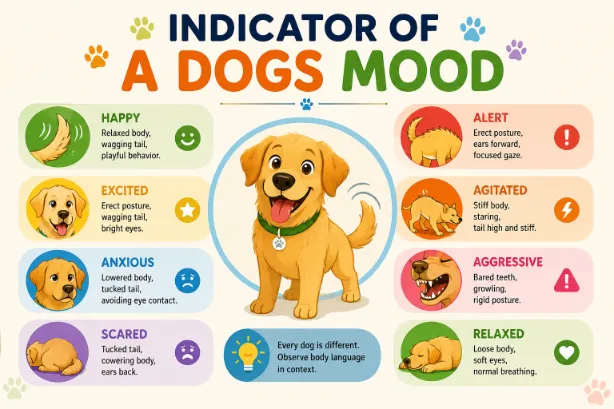
    How a Dog’s Tail Shows Emotion

    A wagging tail does not always mean happiness. Speed, direction, height, and stiffness all change the message.
    Tail Position Possible Emotion
    Fast relaxed wag Friendly, excited
    Tail tucked low Fear, anxiety
    High tail posture Alertness, confidence
    Stiff wag Tension or warning
    Loose sweeping wag Playfulness
    Motionless tail Focus or uncertainty
    Research on canine body language shows that tail movement serves as a communication tool between dogs and humans.

    Happy Dog Tail Signals

    Many owners notice a broad side-to-side wag during greeting time. This movement usually appears alongside a relaxed body posture. Common signs of a happy dog:
    • Wide tail wag
    • Relaxed ears
    • Soft eyes
    • Play bow posture
    • Open mouth with relaxed jaw
    • Bouncy movement
    A happy dog rarely displays stiffness across the body. The entire body seems loose and comfortable.

    Fearful Dog Tail Signals

    Fear changes tail behavior dramatically. Many dogs pull the tail downward or tuck it between the legs. Additional signs may appear:
    • Lowered body posture
    • Avoiding eye contact
    • Trembling
    • Backward ears
    • Slow movement
    Veterinary behavior experts frequently view a tucked tail as a signal of discomfort or stress. Dog

    Alert and Watchful Tail Behavior

    Dogs stay highly aware of sounds, smells, and movement around them. During alert moments, the tail may rise higher than normal. You may notice:
    • Upright posture
    • Forward-facing attention
    • Tail held high
    • Limited wagging
    • Focused gaze
    This posture does not automatically signal aggression. Many dogs simply monitor their surroundings before deciding how to react.

    Tail Wagging Myths

    Many pet owners assume every wag means joy. That belief causes confusion. Several studies and behavior references note that tail wagging can communicate many emotions. Examples:
    • Excitement
    • Nervousness
    • Frustration
    • Social interest
    • Defensive behavior
    A dog preparing to guard territory may wag the tail while keeping the body rigid. Context matters more than movement alone.

    Direction of Tail Wagging

    Researchers discovered that wag direction may reveal emotional responses. Findings showed:
    • Right-side dominant wagging appeared more frequently during positive interactions.
    • Left-side dominant wagging appeared more frequently during stressful or negative situations.
    These differences remain subtle and may not be easy for casual observers to notice. Scientists still study this behavior to learn more about canine communication.

    Dog Breeds and Tail Communication

    Not every breed communicates through the tail in the same way. Breed characteristics can affect visibility.
    Breed Trait Effect on Tail Signals
    Curled tail Harder to read
    Short tail Reduced visual cues
    Docked tail Limited expression
    Long tail Easier observation
    Thick fur May hide movement
    Owners should observe the entire body rather than relying solely on the tail.

    Other Mood Indicators Besides the Tail

    The crossword clue focused on the tail, yet dogs use many communication signals together. Watch these areas:

    Ears

    • Forward ears may signal attention.
    • Flattened ears may signal fear.
    • Relaxed ears usually suggest comfort.

    Eyes

    • Soft gaze suggests relaxation.
    • Wide eyes may signal concern.
    • Prolonged staring may signal tension.

    Mouth

    • Relaxed mouth suggests comfort.
    • Lip licking may appear during stress.
    • Exposed teeth may serve as a warning.

    Body Posture

    • Loose posture suggests confidence.
    • Cowering posture suggests fear.
    • Play bows suggest excitement.
    Experts recommend reading all body signals together for the most accurate interpretation.

    Why Crossword Fans Searched This Clue

    The New York Times Mini Crossword attracts players who enjoy short daily puzzles. Some clues appear simple yet require a specific answer. “Indicator of a dog’s mood” led many players to search online because several body parts seemed possible:
    • Ears
    • Eyes
    • Bark
    • Tail
    The puzzle required a four-letter solution, making “TAIL” the correct fit. Crossword databases later confirmed the answer.

    Practical Tips for Reading Your Dog

    Pet owners can improve communication through observation. Helpful habits:
    • Watch the entire body.
    • Notice changes from normal behavior.
    • Observe posture during greetings.
    • Pay attention to ear position.
    • Monitor tail height and speed.
    • Give space to fearful dogs.
    Consistent observation creates stronger communication between owners and pets.

    Common Tail Positions and Meanings

    Tail Action Message
    Fast circular wag High excitement
    Gentle side wag Friendly mood
    Tail between legs Fear
    Straight upward tail Alertness
    Rigid tail Tension
    Low relaxed tail Calm state
    These signals become more reliable after observing them together with posture and facial expressions. The New York Times Mini Crossword clue “Indicator of a dog’s mood” had a simple but accurate answer: TAIL. Crossword reference sites, puzzle archives, and clue databases confirmed the solution. The answer works because a dog’s tail serves as one of the clearest visual signals of emotional state. A relaxed wag, a tucked tail, or a high alert posture can reveal plenty about how a dog feels at that moment. Pet behavior specialists frequently rely on tail movement alongside ear position, posture, and facial expression to evaluate canine emotions.

    What is the answer to Indicator of a Dogs Mood NYT?

    The answer is TAIL, a four-letter solution used in the New York Times Mini Crossword.

    Does a wagging tail always mean a dog is happy?

    No. Tail wagging may signal excitement, nervousness, alertness, or tension depending on posture and movement style.

    Why do dogs tuck their tails?

    A tucked tail commonly signals fear, anxiety, submission, or discomfort.

    Can dogs communicate without barking?

    Yes. Dogs communicate through tail movement, ear position, posture, eye contact, and facial expressions.

    Why was TAIL the crossword answer?

    The tail acts as a visible mood signal in dogs, making it the best match for the clue and required letter count.
  • Birthplace of Buddhism NYT

    Birthplace of Buddhism answer printed in the puzzle was “India.” That clue created discussion among history lovers and Buddhist scholars because many readers connect Buddhism with Lumbini in present-day Nepal. The topic links to ancient history, geography, religion, and cultural heritage. According to UNESCO, Lumbini marks the birthplace of Siddhartha Gautama, who later became the Buddha.

    Why the NYT Crossword Answer Was India

    The New York Times crossword clue used “India” as the solution because Buddhism first developed and spread across the Indian subcontinent. Buddha attained enlightenment in Bodh Gaya, delivered his first sermon in Sarnath, and spent much of his teaching life in regions that fall within modern India. Some historians and Buddhist followers accept India as the birthplace of Buddhism as a religion. Others point out that Buddha himself entered the world in Lumbini, which now lies inside Nepal. This difference explains the debate around the crossword clue.

    Lumbini and the Birth of Gautama Buddha

    Lumbini remains one of the holiest Buddhist pilgrimage destinations on Earth. The sacred site sits in southern Nepal near the Indian border. UNESCO lists it as the birthplace of Lord Buddha and identifies archaeological evidence that supports this claim. Important details about Lumbini:
    • Located in Rupandehi District, Nepal
    • UNESCO World Heritage Site
    • Home to the Maya Devi Temple
    • Contains the Ashoka Pillar inscription
    • Major pilgrimage destination for Buddhists worldwide
    The Ashoka Pillar serves as one of the strongest historical records linked to Buddha’s birth. Emperor Ashoka visited the area during the third century BCE and ordered the pillar's installation. Its inscription identifies the location as the birthplace of Shakyamuni Buddha.

    Table: India vs Nepal in the Birthplace Debate

    Topic India Nepal
    Birth of Buddha No Yes, at Lumbini
    Enlightenment Site Bodh Gaya No
    First Sermon Sarnath No
    Early Growth of Buddhism Yes Limited
    Main Argument Birthplace of the religion Birthplace of Buddha
    Historical Connection Very strong Very strong
    This comparison explains why crossword creators may choose “India” while many historians mention “Nepal.”

    The Historical Journey of Buddhism

    Buddhism began more than 2,500 years ago. Siddhartha Gautama belonged to the Shakya clan. After leaving royal life, he searched for a path beyond suffering. He later attained enlightenment beneath the Bodhi Tree in Bodh Gaya. After enlightenment, Buddha traveled across northern India and shared his teachings. Monastic communities formed around his philosophy. These communities helped Buddhism spread throughout Asia. Major locations linked to Buddha’s life:
    • Lumbini – Birth
    • Bodh Gaya – Enlightenment
    • Sarnath – First Sermon
    • Kushinagar – Final Nirvana
    These four sites attract millions of pilgrims each year. Birthplace

    Why Lumbini Holds Global Religious Value

    Lumbini serves as more than a historical destination. Pilgrims visit the site for meditation, prayer, and spiritual reflection. The area contains monasteries from many countries, including Thailand, China, Japan, Vietnam, South Korea, Germany, and France. Visitors can see:
    • Maya Devi Temple
    • Sacred Garden
    • Ashoka Pillar
    • Ancient Monastery Ruins
    • Sacred Pond (Puskarini)
    • International Monastic Zone
    The peaceful atmosphere attracts tourists, researchers, monks, and spiritual travelers from every continent.

    The Maya Devi Temple

    The Maya Devi Temple marks the exact location linked to Buddha's birth. Archaeologists uncovered ancient remains beneath the current structure. Research revealed layers of construction dating back many centuries. Inside the temple, visitors can view:
    • Ancient brick foundations
    • Marker stone linked to Buddha's birthplace
    • Archaeological remains from earlier shrines
    The sacred pond nearby holds religious value because tradition states that Queen Maya bathed there before giving birth.

    How the Crossword Clue Created Discussion

    Crossword clues depend on short answers. Puzzle editors sometimes choose broader interpretations that fit letter counts and puzzle design. The clue “Birthplace of Buddhism” triggered debate for three main reasons:
    1. Buddha was born in modern Nepal.
    2. Buddhism developed across ancient India.
    3. National borders looked different during Buddha's lifetime.
    Many readers viewed Nepal as the correct answer because Lumbini lies there today. Others accepted India because the religion formed and expanded throughout ancient Indian territories.

    Ancient Borders and Modern Countries

    Modern political boundaries did not exist during Buddha's lifetime. The region consisted of kingdoms, republics, and tribal territories. Ancient Lumbini belonged to the area associated with the Shakya people. Modern maps place Lumbini inside Nepal. Historians still discuss ancient territorial classifications because national borders shifted repeatedly across South Asia over thousands of years.

    UNESCO Recognition of Lumbini

    UNESCO designated Lumbini as a World Heritage Site because of its immense religious and archaeological value. Researchers discovered evidence from several historical periods at the location. Reasons behind UNESCO recognition:
    Reason Description
    Religious Value Birthplace of Lord Buddha
    Archaeological Value Ancient monasteries and shrines
    Cultural Heritage Pilgrimage center for centuries
    Historical Evidence Ashoka Pillar inscription
    Global Significance Sacred destination for Buddhists
    UNESCO describes Lumbini as one of the most sacred places in Buddhism.

    Tourism and Pilgrimage in Lumbini

    Tourism plays a major role in the local economy. Travelers arrive from Sri Lanka, Thailand, Myanmar, China, Japan, South Korea, India, Europe, and North America. Popular activities in Lumbini:
    • Meditation retreats
    • Temple visits
    • Guided heritage tours
    • Religious ceremonies
    • Photography
    • Academic research
    Many visitors spend several days exploring the monasteries and sacred monuments throughout the complex.

    Common Misconceptions About the Birthplace of Buddhism

    Several myths circulate online regarding Buddhism's origins.

    Buddha Was Born in India

    Modern evidence places his birthplace in Lumbini, Nepal. UNESCO and archaeological records support this conclusion.

    Nepal and Buddhism Have No Connection

    Nepal holds one of the most sacred Buddhist locations in the world. Lumbini attracts pilgrims throughout the year.

    The Crossword Answer Proves Nepal Is Wrong

    Crossword clues use simplified wording. The puzzle answer does not change historical evidence related to Buddha's birthplace.

    Why This Topic Remains Popular Online

    Search interest increases whenever crossword clues generate debate. Many readers search phrases such as:
    • Birthplace of Buddhism NYT
    • Birthplace of Buddhism crossword answer
    • Was Buddha born in India or Nepal
    • Lumbini birthplace of Buddha
    • Buddhism origin location
    These searches show strong public interest in religious history and ancient civilizations. The phrase “Birthplace of Buddhism NYT” refers to a crossword clue that listed “India” as the answer. Historical records present a more detailed picture. Buddhism developed across ancient India, yet Siddhartha Gautama entered the world in Lumbini, Nepal. UNESCO, archaeological discoveries, and the Ashoka Pillar support Lumbini as Buddha’s birthplace. This distinction explains why discussions still appear across forums, travel guides, and religious communities.