
Indicator of A Dogs Mood NYT
Indicator of a dogs mood correct answer was TAIL. Multiple crossword databases and puzzle trackers listed “TAIL” as the accepted four-letter solution.
A dog’s tail gives clear signals about emotions, attention, excitement, fear, and comfort. Pet owners, trainers, and veterinarians watch tail movement closely because it reveals plenty about a dog’s emotional state.
Why the Answer Is TAIL
The clue connects directly to canine body language. Dogs communicate through posture, ears, eyes, mouth position, and tail movement. Among these signals, the tail remains one of the easiest signs to observe.
| NYT Clue | Answer | Letters |
|---|---|---|
| Indicator of a dog’s mood | TAIL | 4 |
Crossword sources connected with the New York Times Mini confirmed this solution.
How a Dog’s Tail Shows Emotion
A wagging tail does not always mean happiness. Speed, direction, height, and stiffness all change the message.
| Tail Position | Possible Emotion |
|---|---|
| Fast relaxed wag | Friendly, excited |
| Tail tucked low | Fear, anxiety |
| High tail posture | Alertness, confidence |
| Stiff wag | Tension or warning |
| Loose sweeping wag | Playfulness |
| Motionless tail | Focus or uncertainty |
Research on canine body language shows that tail movement serves as a communication tool between dogs and humans.
Happy Dog Tail Signals
Many owners notice a broad side-to-side wag during greeting time. This movement usually appears alongside a relaxed body posture.
Common signs of a happy dog:
- Wide tail wag
- Relaxed ears
- Soft eyes
- Play bow posture
- Open mouth with relaxed jaw
- Bouncy movement
A happy dog rarely displays stiffness across the body. The entire body seems loose and comfortable.
Fearful Dog Tail Signals
Fear changes tail behavior dramatically. Many dogs pull the tail downward or tuck it between the legs.
Additional signs may appear:
- Lowered body posture
- Avoiding eye contact
- Trembling
- Backward ears
- Slow movement
Veterinary behavior experts frequently view a tucked tail as a signal of discomfort or stress.
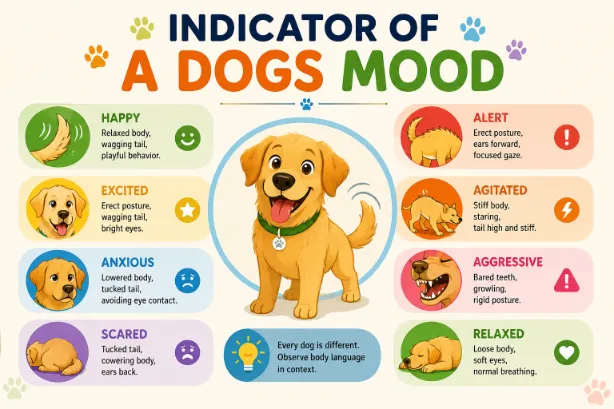
Alert and Watchful Tail Behavior
Dogs stay highly aware of sounds, smells, and movement around them. During alert moments, the tail may rise higher than normal.
You may notice:
- Upright posture
- Forward-facing attention
- Tail held high
- Limited wagging
- Focused gaze
This posture does not automatically signal aggression. Many dogs simply monitor their surroundings before deciding how to react.
Tail Wagging Myths
Many pet owners assume every wag means joy. That belief causes confusion.
Several studies and behavior references note that tail wagging can communicate many emotions.
Examples:
- Excitement
- Nervousness
- Frustration
- Social interest
- Defensive behavior
A dog preparing to guard territory may wag the tail while keeping the body rigid. Context matters more than movement alone.
Direction of Tail Wagging
Researchers discovered that wag direction may reveal emotional responses.
Findings showed:
- Right-side dominant wagging appeared more frequently during positive interactions.
- Left-side dominant wagging appeared more frequently during stressful or negative situations.
These differences remain subtle and may not be easy for casual observers to notice. Scientists still study this behavior to learn more about canine communication.
Dog Breeds and Tail Communication
Not every breed communicates through the tail in the same way.
Breed characteristics can affect visibility.
| Breed Trait | Effect on Tail Signals |
|---|---|
| Curled tail | Harder to read |
| Short tail | Reduced visual cues |
| Docked tail | Limited expression |
| Long tail | Easier observation |
| Thick fur | May hide movement |
Owners should observe the entire body rather than relying solely on the tail.
Other Mood Indicators Besides the Tail
The crossword clue focused on the tail, yet dogs use many communication signals together.
Watch these areas:
Ears
- Forward ears may signal attention.
- Flattened ears may signal fear.
- Relaxed ears usually suggest comfort.
Eyes
- Soft gaze suggests relaxation.
- Wide eyes may signal concern.
- Prolonged staring may signal tension.
Mouth
- Relaxed mouth suggests comfort.
- Lip licking may appear during stress.
- Exposed teeth may serve as a warning.
Body Posture
- Loose posture suggests confidence.
- Cowering posture suggests fear.
- Play bows suggest excitement.
Experts recommend reading all body signals together for the most accurate interpretation.
Why Crossword Fans Searched This Clue
The New York Times Mini Crossword attracts players who enjoy short daily puzzles. Some clues appear simple yet require a specific answer.
“Indicator of a dog’s mood” led many players to search online because several body parts seemed possible:
- Ears
- Eyes
- Bark
- Tail
The puzzle required a four-letter solution, making “TAIL” the correct fit. Crossword databases later confirmed the answer.
Practical Tips for Reading Your Dog
Pet owners can improve communication through observation.
Helpful habits:
- Watch the entire body.
- Notice changes from normal behavior.
- Observe posture during greetings.
- Pay attention to ear position.
- Monitor tail height and speed.
- Give space to fearful dogs.
Consistent observation creates stronger communication between owners and pets.
Common Tail Positions and Meanings
| Tail Action | Message |
|---|---|
| Fast circular wag | High excitement |
| Gentle side wag | Friendly mood |
| Tail between legs | Fear |
| Straight upward tail | Alertness |
| Rigid tail | Tension |
| Low relaxed tail | Calm state |
These signals become more reliable after observing them together with posture and facial expressions.
The New York Times Mini Crossword clue “Indicator of a dog’s mood” had a simple but accurate answer: TAIL. Crossword reference sites, puzzle archives, and clue databases confirmed the solution.
The answer works because a dog’s tail serves as one of the clearest visual signals of emotional state. A relaxed wag, a tucked tail, or a high alert posture can reveal plenty about how a dog feels at that moment. Pet behavior specialists frequently rely on tail movement alongside ear position, posture, and facial expression to evaluate canine emotions.
What is the answer to Indicator of a Dogs Mood NYT?
The answer is TAIL, a four-letter solution used in the New York Times Mini Crossword.
Does a wagging tail always mean a dog is happy?
No. Tail wagging may signal excitement, nervousness, alertness, or tension depending on posture and movement style.
Why do dogs tuck their tails?
A tucked tail commonly signals fear, anxiety, submission, or discomfort.
Can dogs communicate without barking?
Yes. Dogs communicate through tail movement, ear position, posture, eye contact, and facial expressions.
Why was TAIL the crossword answer?
The tail acts as a visible mood signal in dogs, making it the best match for the clue and required letter count.