What Might Have You Seeing Double NYT
A five-letter answer can sometimes create more confusion than a long crossword entry, and “What Might Have You Seeing Double?” is a perfect example. At first glance, the clue seems connected to eyesight, dizziness, or even a few too many drinks. The real solution takes a completely different direction. In the NYT Mini Crossword, the answer is CLONE, a word that matches the idea of encountering an identical copy and suddenly finding two versions of the same thing in front of you.
Why the Answer Is CLONE
Crossword creators enjoy clues that combine a literal meaning with a playful interpretation.
In this clue:
- “Seeing double” suggests encountering two identical versions of something.
- A clone represents a duplicate.
- The clue points directly to the concept of duplication.
- The answer contains five letters, matching the puzzle requirements. (Word Database)
The clue does not refer to a medical condition or blurry vision. Instead, it uses a humorous interpretation centered on identical copies.
Crossword Clue Summary
| Clue | Answer | Letters |
|---|---|---|
| What Might Have You Seeing Double? | CLONE | 5 |
How NYT Mini Crossword Clues Work
The New York Times Mini Crossword has earned a loyal audience because of its compact format and clever clues. Most puzzles can be completed within a few minutes, yet many clues contain subtle twists that reward creative thinking.
Common clue styles include:
- Straight definitions
- Synonyms
- Word associations
- Puns
- Double meanings
- Cultural references
- Everyday phrases
“What Might Have You Seeing Double?” falls into the category of playful word association.
Why Solvers Get Stuck on This Clue
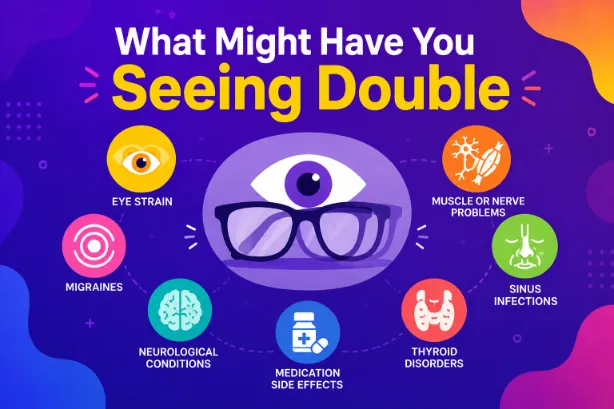
Many crossword enthusiasts initially connect “seeing double” with vision problems or intoxication.
Possible thoughts might include:
- Blurry eyesight
- Dizziness
- Alcohol consumption
- Medical conditions
Several crossword databases list words connected to those meanings, such as “drunk,” “dizzy,” and similar terms. However, the NYT clue points toward duplication rather than vision impairment.
That subtle shift in interpretation makes the puzzle enjoyable.
Strategies for Solving Similar Crossword Clues
Experienced solvers rarely focus on only one meaning of a phrase.
Helpful techniques:
Consider Alternative Meanings
Many clues use figurative language.
For example:
- “Cold” may refer to illness or weather.
- “Pitch” may refer to music, sports, or sales.
- “Double” may refer to duplication rather than eyesight.
Check Letter Count
The answer length provides valuable guidance.
A five-letter clue answer immediately narrows the possibilities.
Fill Crossing Entries First
Crossing answers reveal letters that reduce guesswork.
Even one or two letters can point directly toward the solution.
Look for Wordplay
Question-style clues frequently contain hidden humor or unexpected interpretations. (Wikipedia)
Popular NYT Mini Crossword Themes
The Mini Crossword regularly features themes connected to:
- Technology
- Entertainment
- Sports
- Nature
- Food
- Science
- Everyday conversation
Puzzle constructors frequently use modern vocabulary and familiar expressions. This approach keeps the Mini accessible to both beginners and veteran solvers.
What Makes the NYT Mini Crossword So Popular?
Several characteristics contribute to its popularity:
| Feature | Benefit |
|---|---|
| Small Grid | Fast completion |
| Clever Clues | Engaging challenge |
| Daily Updates | Fresh content |
| Mobile Friendly | Easy access |
| Broad Topics | Appeals to many audiences |
The puzzle provides a satisfying mental exercise without requiring the time commitment associated with larger crosswords.
The Meaning of “Seeing Double”
Outside crossword puzzles, “seeing double” generally refers to diplopia, a condition in which a person perceives two images of a single object.
In wordplay, however, the phrase can suggest:
- Duplicates
- Twins
- Copies
- Replicas
- Clones
The crossword clue relies on this second interpretation, leading directly to CLONE.
Similar Crossword Answers Related to Duplication
Crossword constructors frequently use words connected to copies and repetition.
Examples:
- Clone
- Copy
- Twin
- Match
- Replica
- Duplicate
- Mirror
These terms appear regularly across crossword publications due to their versatility and strong letter combinations.
Benefits of Solving Crossword Puzzles
Daily crossword solving provides several advantages:
- Expands vocabulary
- Strengthens pattern recognition
- Improves spelling skills
- Exercises memory
- Encourages lateral thinking
- Develops problem-solving abilities
Many solvers enjoy the routine of completing a puzzle each morning as part of their daily schedule.
Common Mistakes Made by New Solvers
Beginners frequently:
- Focus on only one definition.
- Ignore clue wording.
- Rush answers.
- Overlook crossing letters.
- Miss simple wordplay.
Successful crossword solving relies on flexibility. The first interpretation is not always the correct one.
The NYT Mini Crossword clue “What Might Have You Seeing Double?” leads to the answer CLONE. The puzzle succeeds because it directs solvers toward a playful interpretation rather than the medical meaning of the phrase. Crossword fans who consider multiple meanings and rely on crossing letters usually reach the solution more quickly.
A single clue like this demonstrates why the NYT Mini remains a favorite among puzzle enthusiasts. Simple wording, smart misdirection, and a satisfying answer create the perfect crossword experience.