Biased Sports Fan NYT
The New York Times Mini Crossword frequently uses short clues that carry more than one meaning, and “Biased Sports Fan” is a strong example. Many solvers initially searched for words linked directly to fandom or loyalty, yet the puzzle pointed toward a sports slang term instead. The correct answer, HOMER, describes a supporter whose judgment heavily favors their own team. Because the word also carries meanings tied to baseball and literature, it created an extra layer of challenge that made the clue memorable among crossword players.
What Does “Homer” Mean in Sports?
A homer refers to a supporter who shows extreme loyalty toward a team, player, or organization. Such fans frequently defend their side regardless of statistics, performance, or evidence.
Sports commentators, journalists, and broadcasters sometimes use the word to describe analysts who appear heavily biased toward a particular team.
Examples:
- A broadcaster praising every decision made by a hometown team may be called a homer.
- A fan who blames officials after every defeat could earn the same label.
- Online sports discussions regularly feature accusations of homerism during heated debates.
The term has become part of sports culture across multiple leagues and competitions.
Important Information at a Glance
| Topic | Details |
|---|---|
| Crossword Clue | Biased Sports Fan |
| Puzzle | New York Times Mini Crossword |
| Answer | HOMER |
| Letter Count | 5 Letters |
| Meaning | A fan with strong favoritism toward their own team |
| Category | Sports Slang |
Sources from crossword databases and puzzle references identify HOMER as the accepted answer for the NYT Mini clue.
Why “Homer” Works as the Crossword Answer
Crossword creators prefer words that contain multiple meanings. HOMER satisfies that requirement perfectly.
The word can refer to:
- A home run in baseball
- The ancient Greek poet Homer
- A biased sports supporter
This versatility makes it attractive for crossword construction. Puzzle editors frequently select words with layered definitions because they create a greater challenge for solvers.
The NYT Mini crossword is famous for concise clues that rely on alternate meanings. Instead of mentioning fandom directly, the puzzle used “Biased Sports Fan,” leading solvers toward the sports-related definition.
The Psychology Behind Biased Sports Fans
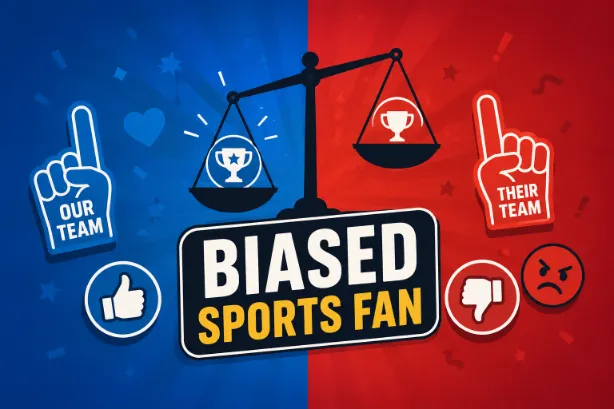
Sports loyalty can shape perceptions in powerful ways. Fans tend to evaluate events through the lens of their preferred team.
Common behaviors include:
- Defending poor performances
- Criticizing referees after losses
- Overrating favorite players
- Discounting opposing teams’ achievements
- Celebrating victories more intensely than neutral observers
Research and commentary on sports fandom have highlighted how supporters frequently interpret the same event differently based on team allegiance.
Signs of a Homer Fan
Many sports supporters display homer tendencies from time to time.
Typical signs include:
- Refusing to acknowledge weaknesses on their team
- Claiming officials favor opponents
- Predicting championships every season
- Dismissing criticism from analysts
- Believing rival teams receive unfair advantages
These behaviors appear across professional and college sports.
Sports Where Homerism Appears Frequently
Baseball
Baseball fans have used the term homer for decades. Radio broadcasters frequently receive the label because they cater to local audiences.
Football
Football supporters display intense loyalty due to regional pride and long-standing rivalries.
Basketball
Basketball debates on television and social media frequently feature accusations of homerism.
Soccer
Club loyalty in soccer can stretch across generations. Fans may defend their clubs regardless of league position or recent performance.
Why Sports Fans Become Biased
Several factors contribute to fan bias.
Emotional Investment
Supporters invest time, money, and energy into following a team. Emotional attachment can influence judgment.
Community Identity
Teams represent cities, schools, or regions. Fans view success as a source of collective pride.
Long-Term Loyalty
Many supporters inherit fandom from parents and relatives. Years of attachment strengthen emotional connections.
Group Dynamics
Fans enjoy sharing victories and frustrations with others who support the same team. Group environments can reinforce existing beliefs.
How Broadcasters Avoid the Homer Label
Professional commentators strive to maintain balance.
Strategies used by broadcasters include:
- Praising both teams fairly
- Relying on statistics
- Critiquing mistakes regardless of team affiliation
- Presenting multiple viewpoints
- Avoiding emotionally charged language
Despite these efforts, viewers sometimes perceive bias simply because commentary conflicts with their expectations.
Crossword Popularity and Sports Clues
Sports-themed clues appear regularly in crossword puzzles because they connect with a broad audience.
Popular sports clue categories include:
- Team nicknames
- Athlete names
- Championship events
- Stadium references
- Sports slang
Words such as HOMER fit crossword design particularly well because they are short, memorable, and possess multiple meanings.
The New York Times Mini Crossword Connection
The New York Times Mini Crossword offers a shorter format than the traditional puzzle. Clues tend to be concise while still requiring creative thinking.
The clue “Biased Sports Fan” challenged players to identify a sports-related slang term rather than a straightforward description. Crossword references list HOMER as the accepted solution for the puzzle.
The crossword itself is edited under the puzzle department of Will Shortz, whose work has shaped modern crossword culture for decades.
Other Crossword Clues That Can Lead to HOMER
Puzzle constructors frequently create alternative clues for the same answer.
Examples include:
- Baseball blast
- Four-base hit
- Long ball
- Iliad author
- Springfield dad
- Sports partisan
The answer changes meaning depending on the clue’s context.
Why This Clue Became Popular Online
Search traffic increased because many solvers completed the puzzle but wanted confirmation of the answer.
Reasons for online interest:
- The clue appeared simple yet deceptive.
- HOMER carries several definitions.
- Sports fans immediately recognized the slang usage.
- Casual solvers searched for clarification after finishing the puzzle.
Crossword discussion sites and answer databases quickly listed HOMER as the solution.
What is the answer to the NYT clue “Biased Sports Fan”?
The answer is HOMER. Crossword references identify it as the correct solution.
How many letters are in the answer?
The answer contains five letters.
What does a homer mean in sports?
A homer is a fan, commentator, or analyst who strongly favors a particular team.
Is homer always a negative term?
Not necessarily. The term can be playful and lighthearted, though it may imply a lack of objectivity.
Did the clue appear in the NYT Mini Crossword?
Yes. Crossword sources list it as a clue from the NYT Mini puzzle.