Oedipus Sophocles Juniper NYT
The phrase “Oedipus Sophocles Juniper NYT” started appearing in search trends after a difficult puzzle from the The New York Times game Connections. Many players searched these words together because they appeared in the same puzzle group and looked completely unrelated at first glance.
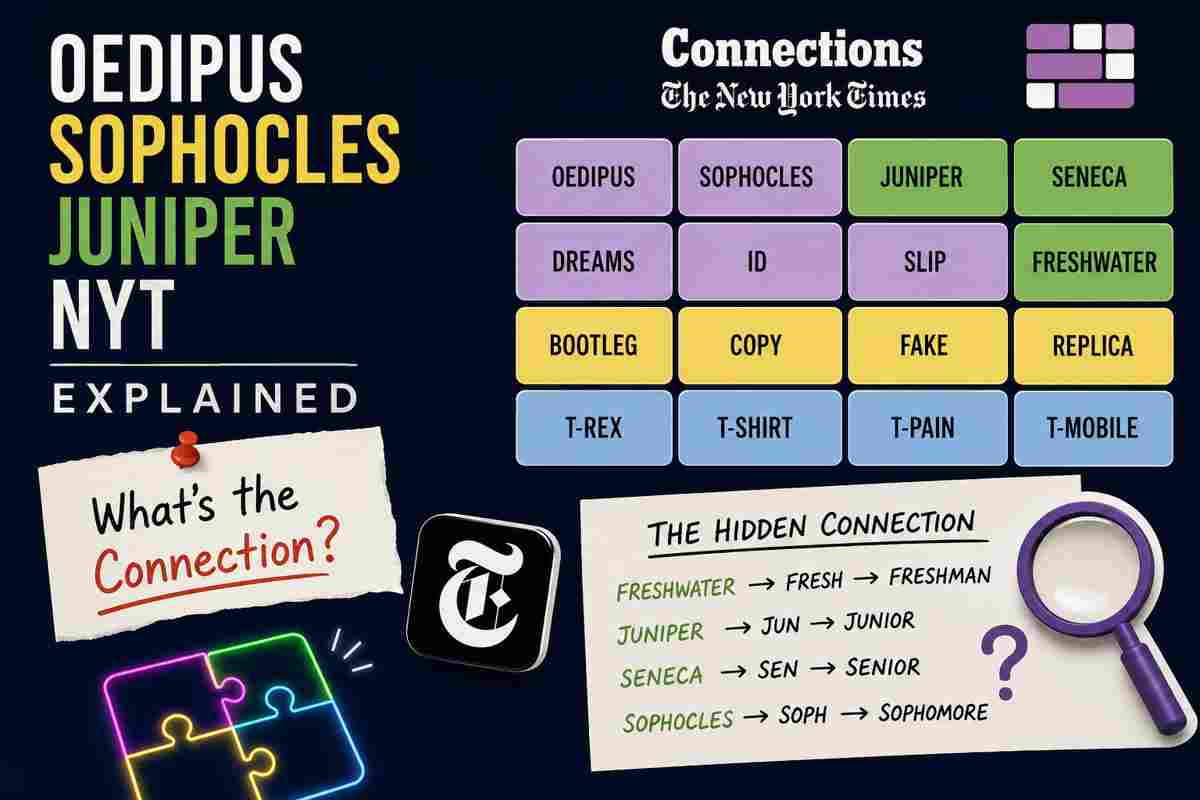
The puzzle included words such as:
- OEDIPUS
- SOPHOCLES
- JUNIPER
- SENECA
- FRESHWATER
A large number of players failed to solve the final category because the connection depended on hidden abbreviations.
Why These Words Appeared Together in NYT Connections
The puzzle category focused on words starting with abbreviations tied to school or college year names.
Here is the actual pattern:
| Puzzle Word | Hidden Beginning | School Year |
|---|---|---|
| Freshwater | Fresh | Freshman |
| Juniper | Jun | Junior |
| Seneca | Sen | Senior |
| Sophocles | Soph | Sophomore |
Many users searched “Oedipus Sophocles Juniper NYT” because Sophocles and Oedipus looked connected through Greek tragedy, while Juniper looked completely random.
That confusion pushed the phrase into Google trends after the puzzle went live.
The Role of Oedipus in the Puzzle
“Oedipus” belonged to another category in the same puzzle.
The correct group linked words connected to psychoanalyst Sigmund Freud:
- Dreams
- Id
- Oedipus
- Slip
This category referenced famous Freudian concepts such as:
- Oedipus complex
- Freudian slip
- Dream analysis
- The id
Several players mixed Oedipus with Sophocles because Sophocles wrote the ancient Greek tragedy Oedipus Rex.
Who Was Sophocles?
Sophocles was an ancient Greek playwright from Athens. He wrote tragedies that still appear in literature courses across the world.
His most famous works include:
- Oedipus Rex
- Antigone
- Electra
In the NYT puzzle, “Sophocles” did not reference Greek literature directly. The puzzle only used the starting letters “Soph” to hint at “Sophomore.”
That trick frustrated many puzzle players online because “Soph” rarely appears as a standalone abbreviation in daily usage.
Why Juniper Confused So Many Players
“Juniper” looked unrelated to every other word in the puzzle.
Most players tried to connect it with:
- trees
- plants
- mythology
- ancient philosophy
But the puzzle only needed the first three letters:
“Jun” → Junior
That design triggered strong reactions across Reddit and puzzle forums. Some users called the category unfair because abbreviations such as “Jun” and “Sen” do not appear frequently in normal conversation.
How the NYT Connections Puzzle Worked
The puzzle on that date contained four separate categories.
| Category | Words |
|---|---|
| Knockoff Items | Bootleg, Copy, Fake, Replica |
| Freud Terms | Dreams, Id, Oedipus, Slip |
| Words After “T-” | Mobile, Pain, Rex, Shirt |
| School-Year Abbreviations | Freshwater, Juniper, Seneca, Sophocles |
The final category created the biggest challenge for players.
Why “Oedipus Sophocles Juniper NYT” Became a Search Trend
Search traffic increased because users wanted answers after failing the puzzle.
Most searches came from players asking:
- Why are Oedipus and Sophocles connected?
- What does Juniper mean in NYT Connections?
- What was the hidden category?
- Was the puzzle based on Greek mythology?
The real answer turned out much simpler than expected.
Only the first parts of the words mattered.
Reddit Reactions to the Puzzle
Players on Reddit heavily criticized the purple category from the puzzle.
Common complaints included:
- “Nobody uses Jun for Junior.”
- “Soph for Sophomore feels forced.”
- “This category made zero sense.”
- “I solved it only through elimination.”
Others defended the puzzle and argued that difficult purple categories usually depend on unusual word tricks.
Connection Between Oedipus and Sophocles
There actually is a literary connection between the two words.
Sophocles wrote the tragedy Oedipus Rex, one of the most famous works from ancient Greece.
That connection caused many players to incorrectly group:
- Oedipus
- Sophocles
- Seneca
into a philosophy or classical literature category.
The puzzle creators used that confusion as misdirection.
Why NYT Connections Uses Misdirection
The New York Times designs Connections puzzles to create false patterns.
Puzzle creators usually place words together that appear connected but actually belong to separate categories.
This puzzle used several traps:
| Misleading Connection | Actual Solution |
|---|---|
| Oedipus + Sophocles | Separate categories |
| Seneca + Sophocles | Not philosophy |
| Juniper + Freshwater | Not nature |
| T-Rex + Oedipus | Separate groups |
That puzzle structure pushed difficulty levels much higher than usual.
Final Explanation
The puzzle separated these words into different categories:
- Oedipus → Freudian concepts
- Sophocles → “Soph” from Sophomore
- Juniper → “Jun” from Junior
Some players tried to connect the words through Greek literature or philosophy, but the real solution depended on abbreviations hidden at the start of each word.