Was Verklempt NYT
Was Verklempt appeared as a clue in the June 10, 2025 edition of the New York Times Crossword. The answer was PLOTZED, a Yiddish-derived word that describes someone becoming overwhelmed to the point of fainting, collapsing, or losing composure. Crossword solvers across the United States searched for the clue after its appearance because many were familiar with “verklempt” but less familiar with “plotzed.”
The clue attracted discussion among crossword fans since the relationship between the two words is not always viewed as an exact match. Some solvers associate “verklempt” with becoming emotional or choked up, while “plotzed” suggests a stronger reaction involving exhaustion or collapse.
What Does Verklempt Mean?
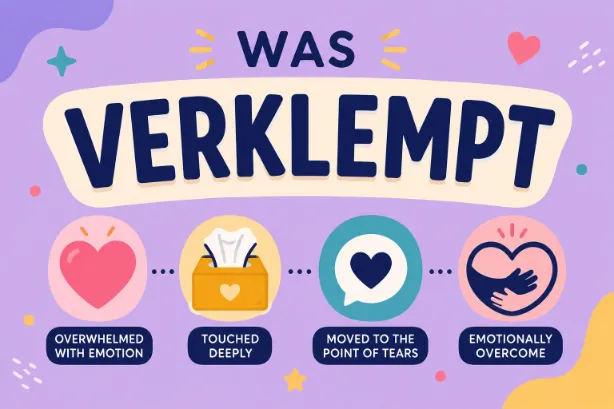
The word “verklempt” comes from Yiddish and describes a state of emotional overwhelm. A person may feel so touched, embarrassed, excited, or emotional that they struggle to speak.
Common meanings of verklempt:
- Choked up with emotion
- Near tears
- Emotionally overwhelmed
- Unable to express feelings clearly
- Deeply moved by an event or situation
Crossword references frequently connect “verklempt” with words such as “teary” and “choked up.”
What Does Plotzed Mean?
“Plotzed” also comes from Yiddish. The term describes a person who faints, collapses, or becomes physically overwhelmed.
Examples:
- Someone plotzed after hearing shocking news.
- A person plotzed from exhaustion after a long day.
- A character plotzed after receiving unexpected results.
Many dictionaries and crossword resources define the term as collapsing or keeling over from stress, excitement, or fatigue.
Was Verklempt NYT Answer
The New York Times Crossword answer for “Was Verklempt” was:
| Clue | Answer |
|---|---|
| Was Verklempt | PLOTZED |
The clue appeared in the June 10, 2025 puzzle and generated discussion because some solvers viewed the answer as a loose synonym rather than a perfect one.
Why Did the Clue Create Discussion?
Crossword enthusiasts enjoy clues that challenge vocabulary knowledge. The “Was Verklempt” clue created debate for several reasons.
- Many solvers knew “verklempt” but not “plotzed.”
- The two words describe different levels of emotional response.
- Some people associate verklempt with tears.
- Others connect plotzed with physical collapse.
- Both terms originate from Yiddish, which helped experienced solvers identify the answer.
One crossword reviewer noted that being verklempt feels more like becoming emotional, while plotzing feels more dramatic and physical.
Yiddish Words in the NYT Crossword
The New York Times Crossword has a long history of using Yiddish expressions. Since the puzzle developed within a New York cultural environment, Yiddish vocabulary appears regularly.
Popular examples include:
| Yiddish Word | Meaning |
|---|---|
| Verklempt | Emotionally overwhelmed |
| Plotzed | Collapsed or fainted |
| Chutzpah | Boldness or nerve |
| Putz | Foolish person |
| Kvell | Feel proud or delighted |
Crossword fans who encounter these words repeatedly develop familiarity with them over time.
How NYT Crossword Clues Work
The New York Times Crossword follows strict clue-writing conventions. Answers match the clue’s tense, grammar, and intended meaning. The puzzle gradually becomes more difficult throughout the week, with Monday puzzles being easier and Saturday puzzles being the toughest.
Important crossword rules:
- Past-tense clues require past-tense answers.
- Plural clues require plural answers.
- Wordplay appears frequently.
- Cultural references appear regularly.
- Foreign-language and Yiddish terms appear throughout the year.
The clue “Was Verklempt” followed the past-tense format, which matched the answer “PLOTZED.”
Why Crossword Solvers Search for “Was Verklempt NYT”
Search volume increases after a challenging crossword puzzle appears. Solvers search for clues online for several reasons:
- To confirm an answer
- To finish an incomplete puzzle
- To learn unfamiliar vocabulary
- To understand word origins
- To compare solving experiences
The phrase “Was Verklempt NYT” became a common search query after the June 2025 puzzle appeared.
Difference Between Verklempt and Plotzed
Although crossword editors accepted them as related terms, there are distinctions.
| Verklempt | Plotzed |
|---|---|
| Emotional reaction | Physical reaction |
| Choked up | Collapsed or fainted |
| Near tears | Overwhelmed to exhaustion |
| Speech becomes difficult | Physical strength gives out |
| Sentimental response | Extreme response |
This difference explains why some solvers questioned the clue-answer pairing.
Tips for Solving Yiddish Crossword Clues
Many crossword puzzles feature Yiddish vocabulary. Learning a few common words can improve solving speed.
Helpful tips:
- Memorize frequently used Yiddish terms.
- Watch for emotional or personality-related clues.
- Pay attention to unusual letter combinations.
- Learn common endings such as “-zed” and “-pah.”
- Practice daily crossword puzzles.
Repeated exposure makes these words easier to identify.
Cultural Background of Verklempt
The word entered mainstream American culture through television, comedy, and everyday conversation. Many English speakers use it informally to describe becoming emotional during weddings, graduations, speeches, or reunions.
Examples:
- “I got verklempt during the ceremony.”
- “She became verklempt after hearing the announcement.”
- “The tribute left everyone verklempt.”
Its emotional tone makes it memorable, which explains why crossword constructors enjoy using it.
Why Crossword Constructors Use Words Like Verklempt
Crossword creators look for words that:
- Have distinctive spelling
- Fit puzzle grids efficiently
- Add cultural variety
- Challenge solvers
- Expand vocabulary
Verklempt meets all of those requirements. Its unusual letter pattern makes it valuable for puzzle construction while giving solvers a chance to learn something new.
“Was Verklempt NYT” refers to a New York Times Crossword clue published on June 10, 2025. The official answer was PLOTZED, a Yiddish word describing someone who became overwhelmed to the point of collapse. While some crossword fans viewed the pairing as imperfect, both terms share roots in emotional overload and Yiddish language traditions. The clue generated discussion among solvers and introduced many readers to a lesser-known vocabulary word. For crossword enthusiasts, it serves as another reminder that language, culture, and wordplay frequently intersect inside the pages of the New York Times Crossword.