
EMS The Heart of Summer NYT
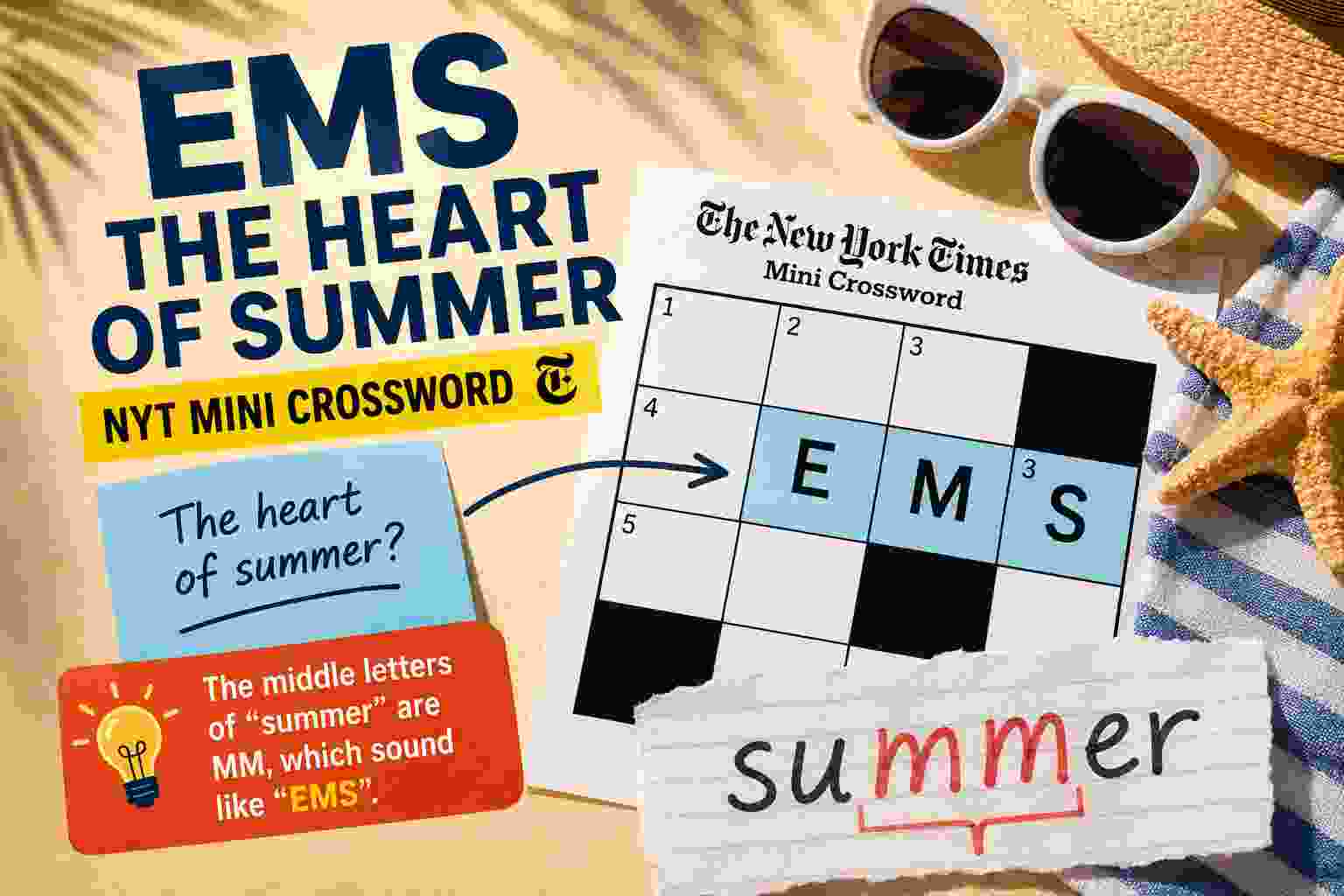
The answer of “The Heart of Summer NYT” does not connect directly with weather, heat, or the summer season. The puzzle uses a word trick rather than a direct meaning. Interestingly, “The heart of summer?” solution is EMS.
Many players first searched for seasonal terms such as heat, sun, July, or vacation-related words. The clue works in a completely different way.
What Does EMS Mean in “The Heart of Summer?”
The answer comes from the center letters inside the word summer:
suMMer
The middle letters are MM. Crossword clues sometimes convert letters into their spoken sound. The pronunciation of M becomes “em.” Two of them together create “ems.”
This pattern can be viewed in a simple format:
| Word | Center Letters | Spoken Sound | Final Answer |
|---|---|---|---|
| Summer | MM | Em + Em | EMS |
That small language trick created confusion for many puzzle players because they expected a seasonal connection rather than a phonetic clue.
Why The NYT Clue Confused Solvers
Many Mini Crossword clues rely on direct definitions. A clue about food points toward food, and a clue about geography points toward a place.
“The heart of summer?” moved in another direction.
Several reasons created confusion:
- The clue used a question mark.
- Solvers expected a season-related answer.
- “EMS” usually reminds readers of emergency medical services.
- The connection required a sound-based interpretation.
- The answer depended on locating the center letters of a word.
Question marks in crossword puzzles frequently signal that a clue contains wordplay.
Hidden Purpose of the Question Mark
Puzzle creators place question marks at the end of clues for a reason. It tells players that a literal interpretation may lead in the wrong direction.
Examples:
- “Cold shoulder?” may connect with food or behavior.
- “Head of lettuce?” could point toward the first letter rather than a vegetable.
- “Heart of summer?” points toward the middle letters.
Experienced crossword players quickly notice these small signals.
How Crossword Constructors Use “Heart” Clues
The term heart appears regularly in crossword puzzles. It usually refers to the middle part of a word.
Examples appear below:
| Clue Phrase | Middle Section |
|---|---|
| Heart of table | BL |
| Heart of planet | AN |
| Heart of winter | NT |
| Heart of summer | MM |
Constructors enjoy these clue structures because they force readers to shift away from straightforward thinking.
Why EMS Created Debate Online
Puzzle discussions after publication showed that many players disliked this clue. Some users described it as overly tricky, while others enjoyed the challenge.
Common reactions included:
- Confusion during the first attempt
- Surprise after learning the answer
- Frustration about the wordplay
- Appreciation for the creativity
Community discussions later explained that the clue had appeared through similar wording before. Some solvers immediately spotted the pattern because of previous puzzle experience.
How Mini Crosswords Use Word Tricks
The NYT Mini Crossword looks small, but short grids create limited space. Constructors use creative language methods to increase difficulty.
Popular clue styles include:
- Double meanings
- Sound-based clues
- Abbreviations
- Hidden letters
- Word rearrangements
- Cultural references
A small puzzle can feel harder than a large crossword because fewer squares leave fewer hints.
Similar Wordplay Examples
Players who enjoyed solving “EMS The Heart of Summer NYT” may notice related clue styles in future puzzles.
Examples:
| Clue | Logic |
|---|---|
| Center of planet | Middle letters |
| Beginning of winter | First letters |
| End of season | Last letters |
| Voice of “B” | Letter pronunciation |
Repeated exposure helps solvers identify patterns more quickly.
Of course, “EMS The Heart of Summer NYT” uses a phonetic puzzle method rather than a seasonal definition. The clue points toward the middle letters inside summer, creating MM, which sounds like EMS after pronunciation. That small twist surprised many players and triggered plenty of discussion across crossword communities.
Solvers who learn this pattern usually spot similar clues much faster in future NYT Mini puzzles.